TL;DR
The most collectible classic roadsters combine rarity, timeless design, strong performance, originality, documented history, and lasting enthusiast demand. Standout examples include the Mercedes-Benz 300 SL Roadster, Porsche 356 Speedster, Jaguar E-Type Roadster, first-generation Chevrolet Corvette, Ford Thunderbird, and Shelby Cobra. British favorites such as the MG MGB, Triumph TR3, TR4, and TR6, along with the Austin-Healey 3000, can also offer accessible ways to enjoy classic roadster ownership.
For collectors, condition and provenance can matter just as much as the model itself. Original components, matching numbers, factory options, restoration records, ownership history, and documented mileage can all influence classic car values. Before buying, it is important to inspect the vehicle carefully, research comparable sales, verify its history, and account for ongoing maintenance, insurance, storage, and repair costs.
Why Are Classic Roadsters So Collectible?
There is something irresistible about a classic roadster. The open top, low seating position, direct mechanical feedback, and unmistakable sense of occasion make these cars feel different from ordinary vehicles. Every drive can become an event.
For many U.S. collectors, roadsters represent much more than transportation. They are rolling examples of automotive design, engineering, racing history, and driving culture. Some have become highly sought-after collector cars, while others remain relatively accessible options for enthusiasts entering the hobby.
Of course, simply being old does not make a convertible collectible. The most collectible classic roadsters tend to have a combination of characteristics that continue to attract buyers decades after they first left the factory.
These cars often have a compelling story, distinctive styling, engaging performance, and a strong connection to automotive history. When those qualities are supported by rarity, originality, and good documentation, a classic roadster can become an especially desirable addition to a collection.
This guide explores several of the roadsters collectors pursue, explains what makes them special, and highlights important considerations for anyone thinking about buying one.
What Makes a Roadster Collectible?
A roadster becomes collectible when it offers more than nostalgia. Collectors generally look for a vehicle with distinctive character, historical importance, desirable specifications, and evidence that it has been properly preserved or restored.
The strongest classic roadster investments often share several characteristics:
- Rarity: Limited production numbers, special editions, unusual specifications, or a small number of surviving examples can increase collector interest.
- Originality: Correct drivetrain components, interior materials, paint, trim, and factory details can help preserve a vehicle’s historical identity.
- Provenance: Ownership records, service history, competition records, restoration documentation, and factory paperwork can help establish a car’s background.
- Condition: A properly maintained and honest example can be more desirable than a poorly executed restoration.
- Design: Timeless styling can help a roadster remain appealing across generations of collectors.
- Driving experience: A collectible roadster should offer an engaging experience behind the wheel, not simply look attractive when parked.
- Market demand: Cars with strong enthusiast communities, racing connections, cultural significance, or an established collector following can maintain long-term attention.
Documentation is particularly important when evaluating an older vehicle. Records can help establish what equipment the car originally had, who owned it, how it was maintained, and what restoration work has been completed.
For collectors, those details can make a significant difference when comparing two otherwise similar vehicles. A car with a clearly documented history may provide greater confidence than one with an uncertain past.
Mercedes-Benz 300 SL Roadster
Few open-top automobiles carry the prestige of the Mercedes-Benz 300 SL Roadster. Introduced in 1957, it brought the celebrated 300 SL experience into a more usable open-air configuration while retaining the model’s distinctive engineering and styling.
Its fuel-injected inline-six engine, elegant bodywork, and luxurious cabin helped establish the 300 SL Roadster as a landmark among European sports cars. Decades later, it remains one of the world’s most recognizable and desirable vintage roadsters.
Recorded market sales demonstrate just how valuable exceptional examples can become. CLASSIC.COM lists sales for the Mercedes-Benz 300 SL Roadster ranging from $880,000 to $3,085,000, with an average benchmark of approximately $1.44 million.
Collectors pay close attention to originality and documentation when considering these cars. Original engines, matching components, desirable factory colors, and comprehensive records can all contribute to a vehicle’s appeal.
A 300 SL Roadster is therefore more than an old convertible. For many collectors, it represents a centerpiece automobile with substantial historical, design, and cultural significance.
Porsche 356 Speedster
The Porsche 356 Speedster is another name that frequently comes up when discussing the most collectible classic roadsters. With its low windshield, lightweight construction, minimalist cabin, and agile handling, the Speedster delivered an unusually focused driving experience.
Its popularity in Southern California helped strengthen its identity within American car culture. The combination of favorable weather, an active enthusiast community, and the car’s approachable sports-car character made the 356 Speedster particularly well suited to open-air driving.
The 356A Speedster remains highly desirable within the U.S. collector car market. CLASSIC.COM reports recorded sales ranging from $195,000 to $590,000, with an average price of $344,719.
Collectors often pay particular attention to early “Pre-A” examples, matching-numbers cars, original-style interiors, and vehicles supported by reliable documentation.
Even when a Speedster is not a top-tier concours example, a properly sorted car can offer an experience that modern performance cars often struggle to reproduce. The controls, sounds, lightweight construction, and direct mechanical connection make the driving experience feel immediate and personal.
For enthusiasts who value the experience as much as the investment potential, that character is a major part of the Speedster’s appeal.
Jaguar E-Type Roadster
The Jaguar E-Type Roadster has earned a permanent place in automotive history through its combination of elegant design and sporting performance. Its long hood, curved rear bodywork, low profile, and carefully balanced proportions continue to attract attention more than half a century after its introduction.
The car’s styling became so influential that it was admired by some of the most prominent figures in the automotive world. That design legacy remains a major part of the E-Type’s appeal among collectors.
Early Series 1 examples are particularly sought after, especially cars retaining desirable factory details such as covered headlights and the appropriate interior and dashboard configuration.
For U.S. collectors, the E-Type offers an appealing combination of glamour, performance, and usability. Depending on its condition and specification, it can serve several roles within a collection.
It can be displayed at a concours event, enjoyed during a weekend drive, or taken to a classic-car rally. That versatility helps explain why the E-Type continues to have such a strong following.
Chevrolet Corvette C1
The first-generation Chevrolet Corvette represents one of the foundational stories of the American sports car. Introduced in 1953, the C1 Corvette initially relied on a six-cylinder engine before becoming a more serious performance machine with the introduction of Chevrolet’s small-block V8 in 1955.
Early “solid-axle” Corvettes are especially interesting to collectors. Fuel-injected examples and cars with desirable factory specifications can command significant attention, particularly when their original equipment and history are well documented.
Collectors typically examine the engine, transmission, trim, factory options, VIN and identification details, and restoration records when evaluating an early Corvette.
Authentication can also be an important part of the process. Documentation and specialist verification can help establish whether a vehicle retains its original or appropriately documented components.
The C1 Corvette remains compelling because it represents the beginning of an important American performance legacy. It can appeal to collectors interested in U.S. automotive history while also offering the visual character and open-air experience associated with an early sports car.
Certain rare and well-preserved examples can occupy the higher end of the collector market, while other C1s can provide a more approachable entry into vintage Corvette ownership.
Ford Thunderbird
The first-generation Ford Thunderbird offers a different interpretation of the classic American roadster. Built from 1955 through 1957, the early Thunderbird emphasized style, comfort, and presence rather than concentrating solely on track-oriented performance.
The two-seat configuration and distinctive 1950s styling make these cars instantly recognizable. The 1955 and 1956 models established the Thunderbird’s identity, while the 1957 version brought additional power and refinement before Ford transformed the Thunderbird into a four-seat model.
Collectors often look for clean examples with original interiors, correct trim, functioning accessories, and reliable documentation.
For someone interested in classic American cruising, the Thunderbird can be particularly appealing. It captures the atmosphere of 1950s Americana while providing an enjoyable open-air experience.
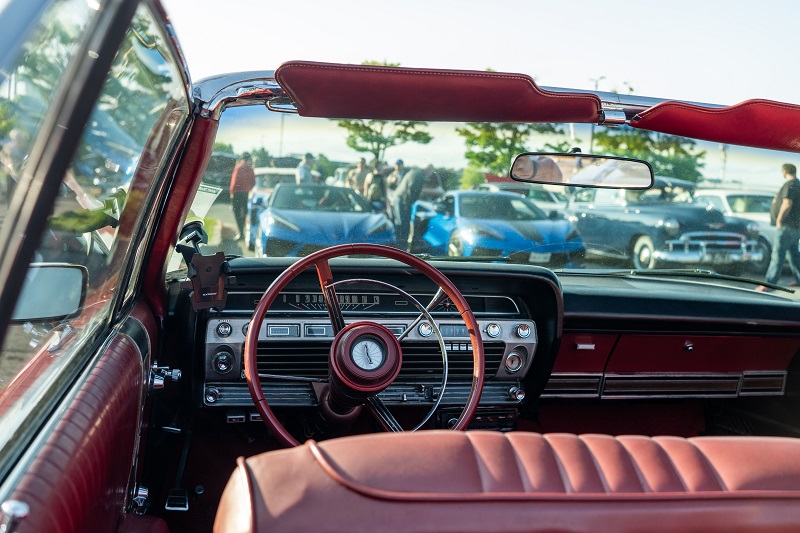
It is also the kind of vehicle that can fit naturally into local cars-and-coffee gatherings, regional shows, and casual weekend drives. That combination of recognizable styling and approachable personality continues to make the first-generation Thunderbird relevant to collectors.
Shelby Cobra
The Shelby Cobra is among the most famous American performance roadsters ever produced. Its formula was relatively straightforward but extraordinarily effective: combine a lightweight British AC chassis with powerful American V8 performance.
Carroll Shelby’s creation quickly developed a legendary reputation because of its exceptional performance and distinctive character.
Original 289 and 427 Cobras are extremely rare and valuable. Their desirability has also created a major challenge for prospective buyers because the Cobra is one of the most frequently reproduced classic performance cars.
That makes authentication essential.
Before purchasing an alleged original Cobra, buyers should carefully investigate:
- Chassis and vehicle history
- Engine provenance
- Period documentation
- Ownership records
- Competition or racing history, when applicable
- Restoration records
- Identification numbers and factory documentation
- Independent inspection findings
A buyer should never assume that a visually convincing Cobra is an original simply because the car looks correct.
For enthusiasts who cannot purchase an original Cobra, high-quality continuation cars and period-correct replicas can offer a way to experience some of the model’s driving character. However, the distinction between an original Cobra and a replica or continuation car is important.
They occupy very different positions within the collector car market, and their histories, values, documentation, and investment considerations should not be treated as equivalent.
British Classics: MG, Triumph, and Austin-Healey
Not every collectible roadster requires a seven-figure budget. Several British sports cars remain attractive options for enthusiasts who want classic styling, simple mechanicals, and an engaging driving experience.
The MG MGB is popular because of its straightforward character, charming styling, and broad parts availability. Its relatively simple construction can also make it approachable for owners who want to become more involved in maintaining a classic vehicle.
Triumph offers another group of recognizable British roadsters. Models such as the TR3, TR4, and TR6 deliver the traditional British sports-car experience through compact proportions, manual controls, open-air driving, and plenty of personality.
The Austin-Healey 3000 is particularly desirable among enthusiasts who want a larger and more powerful British roadster. Its “Big Healey” styling, rally heritage, and strong owner community have helped it remain popular at classic-car events throughout the United States.
These cars generally do not reach the same market levels as an exceptional Mercedes-Benz 300 SL Roadster or Porsche 356 Speedster. However, they can still be meaningful classic roadster investments when purchased carefully, maintained properly, and supported by good documentation.
Their accessibility also makes them useful for collectors who want to experience classic-car ownership without immediately entering the highest-value segment of the market.
What to Check Before Buying a Classic Roadster
Buying a vintage sports car should be an exciting experience, but enthusiasm should not replace due diligence. A beautiful exterior can conceal expensive mechanical, electrical, or structural problems.
Before purchasing a classic roadster, take time to investigate the vehicle thoroughly.
Use this checklist:
- Review the title, VIN locations, service records, ownership history, and restoration paperwork.
- Look carefully for rust in the frame, floors, rocker panels, battery area, suspension mounting points, and other vulnerable areas.
- Determine whether the engine, transmission, and major components correspond with factory records or the vehicle’s documented history.
- Examine paint edges, panel gaps, trim fitment, and other signs that may indicate previous accident repairs or major bodywork.
- Start the engine from cold and listen for unusual noises, excessive smoke, rough running, or other warning signs.
- Test the brakes, steering, clutch, gearbox, gauges, lights, electrical equipment, and convertible top.
- Hire a specialist familiar with the specific marque for a professional pre-purchase inspection.
- Research recent auction results and asking prices for comparable vehicles with similar specifications and condition.
- Include insurance, storage, maintenance, transportation, and unexpected repair costs in your ownership budget.
A pre-purchase inspection can be especially valuable when dealing with older cars because hidden problems may not be obvious during a short test drive.
Valuation resources can also help buyers understand the market. Hagerty’s valuation tools draw from auction information and consider factors such as equipment, condition, and mileage. Comparing similar vehicles can give prospective buyers a better starting point when assessing asking prices.
How to Buy Smarter in the U.S. Collector Car Market
The U.S. collector car market rewards preparation and patience. Instead of starting with the assumption that a particular vehicle will appreciate, begin by identifying a roadster you genuinely enjoy and learning everything you can about that model.
Research the common problems, desirable specifications, production history, restoration standards, parts availability, and recent market activity before contacting sellers or attending an auction.
Auctions can provide access to high-quality collector cars, but the winning bid is not necessarily the final cost. Buyers should account for auction fees, transportation, taxes where applicable, inspection expenses, storage, and any immediate work the vehicle may require.
Private transactions and specialist dealers can provide different advantages. Depending on the seller and circumstances, buyers may have more opportunity to inspect the vehicle, review documentation, ask detailed questions, and negotiate before completing a purchase.
Matching numbers can strengthen a car’s historical integrity, particularly for highly collectible models. However, they are not the only measure of quality.
Period-correct components, high-quality restoration work, careful maintenance, and comprehensive documentation can all help preserve a classic car’s character and desirability.
Perhaps the most important principle is simple: buy the best example you can reasonably afford.
A solid, well-documented driver can provide years of enjoyment and may require considerably less immediate work than a cheaper project car with hidden structural or mechanical problems. The initial purchase price is only one part of the true cost of classic-car ownership.
Understanding Classic Car Values
Classic car values can vary substantially, even among vehicles of the same model and year. Two seemingly similar roadsters can command very different prices because of condition, originality, specifications, provenance, restoration quality, and market demand.
For example, a car with extensive documentation and original components may appeal to a collector seeking historical authenticity. Another vehicle may have undergone a high-quality restoration using correct components and still attract significant interest.
Mileage can matter as well, but it should always be considered alongside condition and history. A very low-mileage vehicle with questionable storage or maintenance is not automatically preferable to a properly maintained example that has been driven regularly.
Color and equipment can also influence desirability. Certain factory color combinations, engine configurations, transmission choices, and optional equipment may be particularly sought after within specific collector communities.
That is why buyers should avoid relying on a single price figure when evaluating a vintage roadster. Comparing several recent transactions involving vehicles with similar specifications can provide a more useful picture of the current market.
Why Documentation Matters So Much
A classic car’s story can be almost as important as the vehicle itself. Documentation gives buyers a way to verify that story.
Useful records may include:
- Original sales documents
- Factory build information
- Previous titles
- Service invoices
- Restoration receipts
- Ownership records
- Competition records
- Photographs from earlier stages of the vehicle’s life
- Original manuals and accessories
- Expert inspection reports
A complete file of records can help establish what happened to a vehicle over the years. It can also make it easier for a future buyer to understand the work that has been performed.
For especially rare roadsters, provenance can become a major part of the car’s identity. A documented history can distinguish an authentic, historically significant automobile from one that merely resembles it.
The Future of Collectible Roadsters
The appeal of the most collectible classic roadsters is unlikely to disappear simply because automotive technology continues to evolve. These cars provide something that cannot be completely replicated by modern transportation: a direct connection to a particular period of automotive history.
They are physical reminders of changing design philosophies, engineering approaches, racing traditions, and driving culture. More importantly, they encourage owners to drive, maintain, display, and share them with other enthusiasts.
Whether your dream car is a Porsche 356 Speedster, Mercedes-Benz 300 SL Roadster, Jaguar E-Type, early Chevrolet Corvette, Shelby Cobra, or Austin-Healey 3000, research should come before the purchase.
Study the model. Learn which specifications matter. Review comparable sales. Inspect the car carefully. Verify the documentation. And remember that ownership costs continue long after the purchase is complete.
Most of all, choose a classic roadster that genuinely excites you.
The right vintage sports car is not simply an object sitting in a garage. It can be a piece of automotive history, a conversation starter, a rewarding weekend machine, and an experience that connects you with generations of enthusiasts.
A truly memorable classic roadster is not just a treasure to own. It is a treasure you can drive.
This post is generated by Chatgpt.